
In industries like automotive, aerospace, electronics, medical devices, and advanced manufacturing, where precision is everything, parts cleanliness is not just a quality checkpoint. It is the foundation of performance and reliability. The challenge, however, is that the most harmful contaminants are often the ones you cannot see. Micron-level particles, many of which are smaller than dust and invisible without magnification, can interfere with critical functions, damage sensitive components, and ultimately lead to costly equipment failures. As manufacturing tolerances become tighter and engineering demands grown more complex, understanding how these microscopic particles affect parts performance is more important than ever.
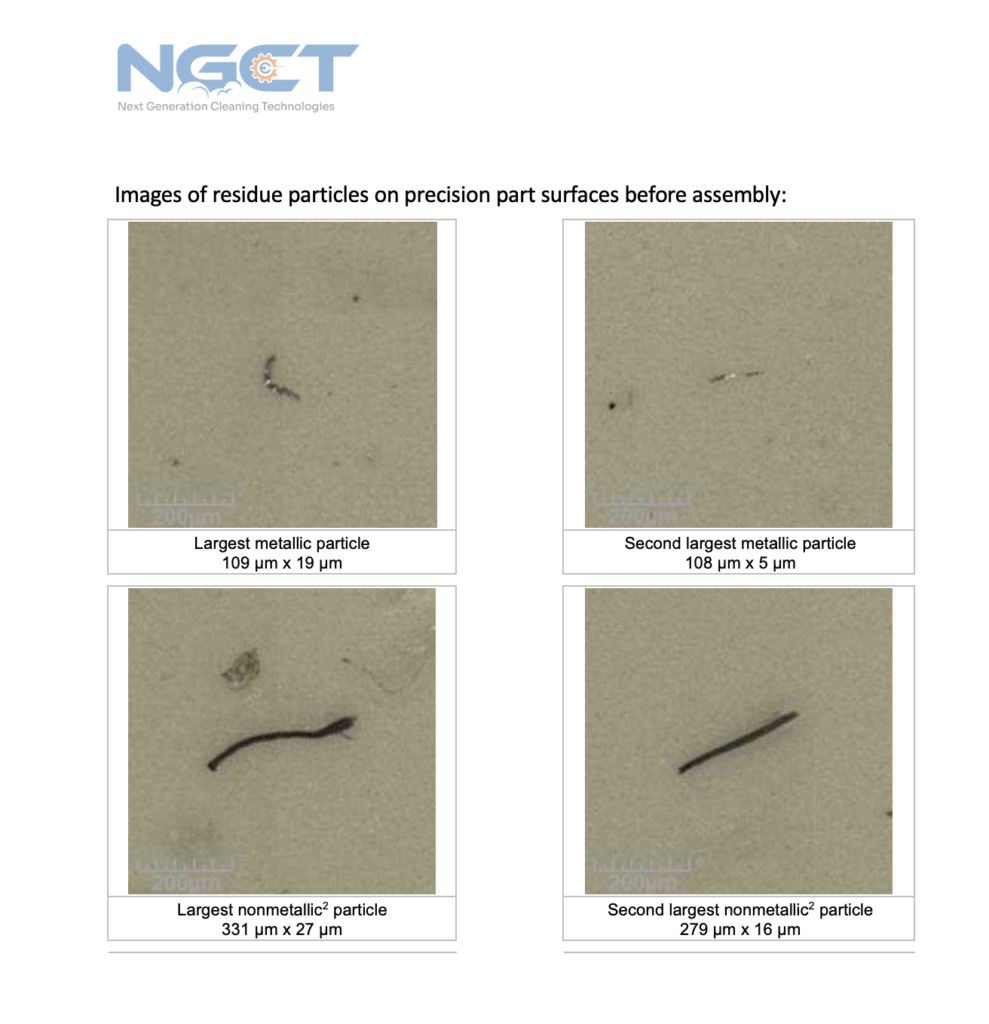
Why Micron-Level contamination is so dangerous?
Micron-sized particles pose a unique threat because high-precision parts operate within extremely tight tolerances. Even a small number of stray articles settling on a surface or embedding themselves into a component can trigger significant problems across the entire system.
1) Wear and Abrasion
Microscopic particles can behave like abrasive grains inside mechanical systems. When they become trapped between moving surfaces, they scrape, score, and gradually erode material. This consequently leads to:
- Increased friction
- Damaged lubrication layers
- Premature component failure
A single particle, if left unaddressed can amplify wear over time.
2) Disrupted tolerances
Modern components are engineered with tolerances as small as one to three microns. At this scale, even the smallest contaminant can disrupt performance.
For example:
- A particle half the size of the tolerance can shift alignment.
- Movement may become restricted.
- Efficiency and accuracy drop significantly.
Industries like automotive, aerospace, optics, medical implants, and semiconductor manufacturing are particularly vulnerable to these disruptions.
3) Corrosion initiation
Certain particles contain moisture, metals, or chemical residues that can trigger corrosion on sensitive surfaces. These reactions often begin microscopically but can expand into major failures when left unchecked.
4) Electrical failures
In electronics, micron-sized conductive particles can cause short circuits, while non-conductive particles may disrupt sensors or interfere with electrical signals. As devices continue to shrink in size and circuit density increases, the risk of contamination-induced malfunction becomes even greater.
Real world example
Consider modern automotive fuel injectors, which often operate with tolerances of just a few microns. A single contaminant, smaller than a speck of dust, can affect spray patterns, reduce fuel efficiency, and increase emissions. This illustrates how even invisible particles can compromise high-value parts systems.
Why traditional parts cleaning is not enough anymore
Conventional parts cleaning methods such as manual scrubbing, basic rinsing, or simple solvent washing are no longer adequate for today’s high-precision parts manufacturing standards. These methods struggle to remove particles smaller than 10 microns and often fail to reach complex geometries, blind holes, or intricately machined surfaces.
Advanced precision parts cleaning-systems such as those engineered by NGCT Cleansys are specifically designed to meet these modern requirements. They can remove ultra-fine particles, reach deep into complex component structures, and deliver consistent, repeatable results. These systems also prioritise environmental responsibility by reducing chemical use and energy consumption.
As industries continue to demand higher reliability and cleanliness, these advanced technologies become an essential part of parts manufacturing rather than an optional add-on.
How manufacturers can better control micron-level contamination
While advanced parts cleaning technology plays a significant role, maintaining cleanliness also requires strong operational discipline. Manufacturers can reduce contamination risk by:
- Investing in high-performance cleaning systems.
- Conducting regular cleanliness and particle analysis testing.
- Maintaining controlled environments to limit airborne contamination.
- Implementing strict handling, packaging, and storage protocols.
Even components cleaned to the highest standards can be re-contaminated without proper workflow controls.
The smallest threats have the biggest consequences
Micron-level contamination is often invisible, but its impact is unmistakable. It can shorten component lifespan, compromise performance, and lead to severe operational disruptions. In industries where precision is non-negotiable, controlling microscopic contaminants becomes a powerful competitive advantage.
As manufacturing continues to evolve, with tighter tolerances, greater miniaturisation, and higher expectations, the need for reliable, advanced parts cleaning solutions will only grow. NGCT’s next-generation cleaning technologies help manufacturers stay ahead of these demands by delivering deep, consistent, and validated cleaning performances that protects both the parts and the company’s reputations.